
Common areas are the parts of a building nobody owns individually and everybody judges. A resident walks through the foyer twice a day without noticing it — until the glass has handprints, the lift carpet has a stain and the bin room smells on a warm afternoon. Prospective buyers and renters form an opinion in the first ten metres, and they form it before they see a single apartment.
Keeping that consistent through a Melbourne year takes a schedule that changes with the seasons and a scope everyone has actually read. Here is how to build both.
What this covers
What common area cleaning actually covers
In Victoria the shared parts of a building are common property, and looking after them is the owners corporation’s responsibility, funded through levies and generally coordinated by the OC manager and the committee. In practice, a cleaning scope for common property covers:
- Entry, foyer and mailroom — floors, glass entry doors, intercom panel, mats
- Lift interiors: floors, walls, mirrors, stainless, and the door tracks
- Corridors, landings, stairwells and fire stairs
- Bin room and chute rooms
- Car park sweep, ramps and pedestrian doors
- Shared amenities — gym, pool surrounds, common bathrooms, rooftop terrace, BBQ area
- Cobweb removal, external entry glass, and the immediate entry surrounds
Just as important is what is not in it. Gardening and leaf blowing, window cleaning above ground level, pest control, waste removal beyond presenting and returning bins, graffiti removal and pressure washing are commonly separate line items. Most disputes between a committee and a cleaner are not about standards at all — they are about a task that everybody assumed was somebody else’s.
Matching the schedule to the building
| Building | Sensible starting frequency | Periodic work |
|---|---|---|
| Small walk-up, 6–12 apartments | Weekly or fortnightly | Quarterly high dusting, annual carpet and entry glass |
| Mid-rise with lift, 20–60 apartments | 2–3 visits a week, with bin room checked every visit | Quarterly high dusting, six-monthly carpets, annual external glass and car park wash |
| Large or mixed-use with retail below | Daily | Monthly detail work, six-monthly carpets, scheduled pressure washing |
| Townhouse or villa complex | Fortnightly, mostly hard surfaces and bins | Annual driveway and common path wash |
Two things shift a building up a tier regardless of size: short-stay letting, which multiplies suitcase traffic and lift use, and ground-floor retail, which brings food, packaging and street dirt into a shared entry.
A seasonal plan for a Melbourne building
Autumn
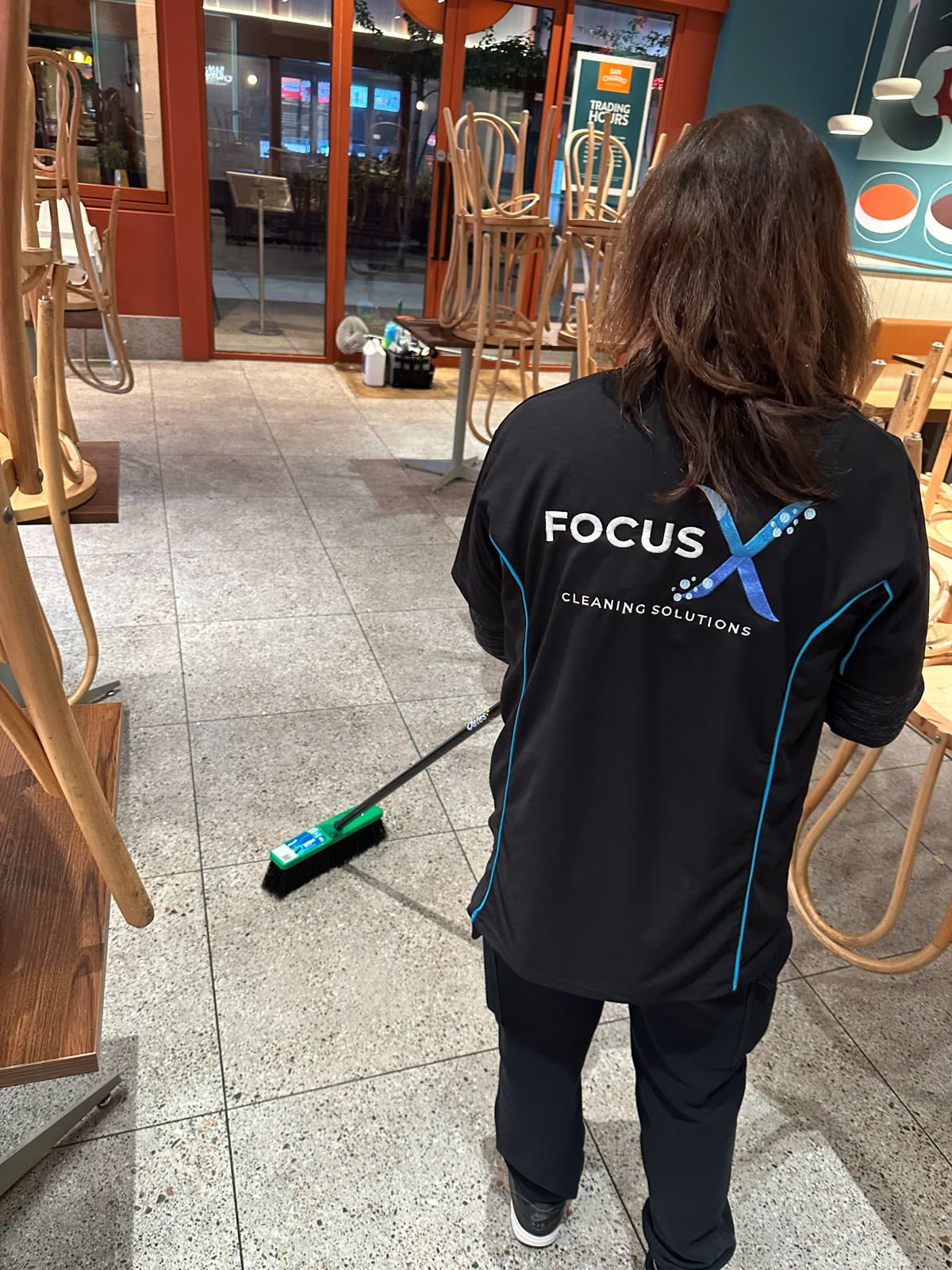
Leaf litter is the whole story. It blows into entries, collects at car park ramp grates and blocks drains right before the first serious rain. Increase entry sweeping, check and clear grates, and get matting in place before the wet weather rather than after the first slip complaint.
Winter
Wet feet, mud and umbrellas. Entry mats need to be long enough to actually dry a shoe, and they need cleaning themselves — a saturated mat stops working. Poorly ventilated stairwells and corridors are where condensation mould appears, usually in ceiling corners and on the cold external wall. Catching it while it is surface growth is a straightforward clean; leaving it until spring is a painting job.
Spring
Pollen films up entry glass and balcony balustrades, insects and cobwebs return around light fittings and eaves, and garden debris tracks in. This is the natural time for the annual external glass clean and a full cobweb sweep — the same washing and squeegee method applies to entry glass, just with the right access equipment.
Summer
Bin rooms are the priority. Organic waste in a warm bin room becomes an odour and pest problem within days, so wash-downs move to a shorter cycle. Pool surrounds, BBQ areas and rooftop terraces are in constant use and need attention on the way into a weekend, not on the way out.
The problem areas in every building
- Lift door tracks. They collect grit, hair and coffee, and they are visible every time someone waits for a lift. A crevice tool and thirty seconds a visit.
- Stainless in the lift. Use minimal product and buff in the direction of the grain. Circular wiping on brushed stainless leaves a visible swirl under downlights.
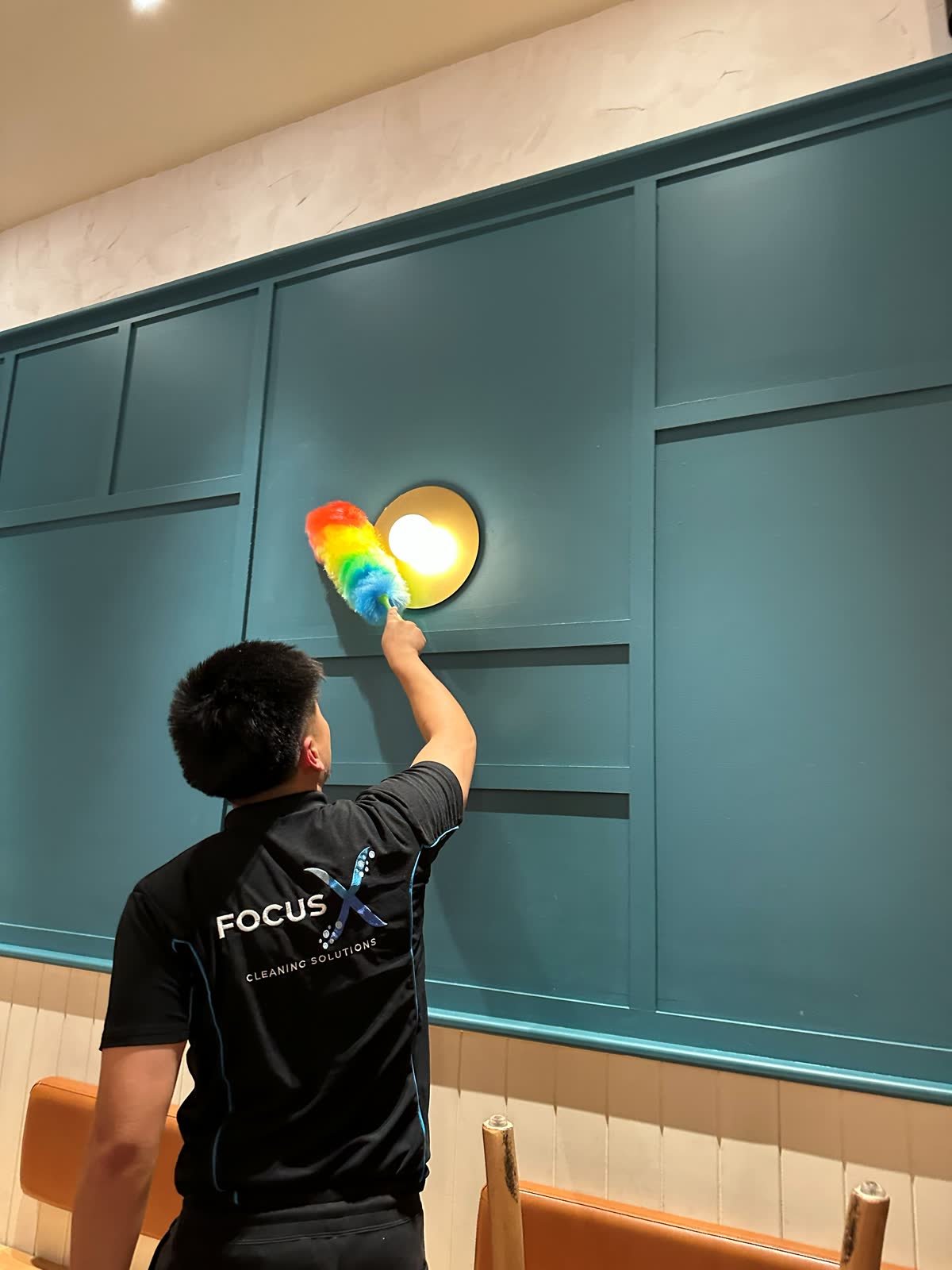
- Entry glass and the intercom panel. Handprints at push height on the glass, and a keypad that is one of the highest-touch surfaces in the building.
- Corridor carpet outside the lifts. This is where traffic lanes form first. Book hot water extraction before the lanes set, not after — compacted soil is what wears carpet out.
- Fire stairs. Rarely used, rarely cleaned, and exactly where dust, cobwebs and abandoned items accumulate. They also need to stay clear for obvious reasons.
- Car park oil spots and ramp grit. Sweep regularly, treat spots when they are fresh, and schedule a periodic wash rather than waiting for a complaint.
- The mailroom. Junk mail on the floor makes an otherwise clean foyer look neglected. A bin in the mailroom solves most of it.
Bins and waste: the recurring complaint
Bin rooms and chute rooms come up again and again in resident complaints, and the cause is usually a system problem rather than a cleaning one.
- Check the chute room or bin room every visit, not on a weekly cycle.
- Know your council’s collection days and who presents and returns the bins — this varies between councils, so confirm it rather than assume.
- Wash floors and bin exteriors on a set cycle, more often in summer, and deodorise afterwards.
- Put clear signage on recycling. Contamination is a resident-behaviour issue, and signage plus a note in the newsletter does more than any amount of sorting after the fact.
- Have a stated process for hard rubbish dumped beside the bins, including who books the council collection and how residents are reminded.
Briefing and reviewing a contractor
Committees change, managers change, and the person who negotiated the original scope moves out. Documentation is what keeps standards steady through all of that.
- A written scope with a frequency against every task and every area, including the periodic ones and the month they fall in.
- An attendance record — a site log or electronic sign-in — so attendance is never a matter of opinion.
- A short periodic report with photos, sent to the OC manager. It settles most questions before they reach a meeting.
- One escalation path. Residents reporting problems directly to cleaners on the stairs produces chaos and no record.
- Clear arrangements for keys and fobs, after-hours access, and which areas are restricted.
- Current certificates of currency for insurance, from anyone you engage.
- An annual review of the scope against how the building is actually being used — short-stay letting, a new café downstairs or a change in bin arrangements all change the job.
A building that looks consistently well kept is rarely one with a heroic cleaning budget. It is one with a scope that matches the building, a schedule that shifts with the seasons and a contractor who is reviewed once a year. If your committee is putting a scope together or comparing tenders, our strata and common area cleaning page sets out how we structure it — send through the number of lots, the levels, whether there is a lift and car park, and the amenities, and that is enough to draft a schedule to compare against.
Questions we get asked
Who is responsible for cleaning common property?
The owners corporation, funded through levies and usually arranged by the OC manager on the committee’s instruction. Individual lot owners are responsible for their own lot — the line between the two is defined by the plan of subdivision, so check it before assuming who pays for what.
How often should the foyer be cleaned?
It is the most visible space in the building, so it usually sets the frequency for everything else. Small buildings can manage weekly; anything with a lift and steady traffic benefits from two or three visits a week, with the entry glass done every visit.
What is usually not included?
Gardening, window cleaning above ground level, pest control, graffiti removal, pressure washing and bulk waste removal are typically quoted separately. That is not a catch — they need different equipment and licensing — but they should be named in the scope so nobody is surprised.
How should residents report a problem?
Through the OC manager or one nominated committee contact, who passes it to the cleaner. Direct requests to cleaners in the corridor create scope creep, no record, and an argument at the next meeting about work that was never authorised.
Do cleaners need keys and fobs?
For most buildings, yes — bin rooms, plant areas, fire stairs and lift access all need them. Record what was issued to whom, and make return on contract end part of the agreement from the start.

