
Office cleaning frequency is usually decided once — the week you move in, in a hurry, against a budget — and then never looked at again. Headcount doubles, the kitchen gets a coffee machine, half the team goes hybrid, and the schedule stays exactly as it was.
There is no single correct answer, but there is a sensible way to work yours out. It starts with three numbers, and none of them is the number of desks.
What this covers
Start with three numbers
- How many people are on site on your busiest day. Not your headcount — the peak. A team of forty with a Wednesday peak of thirty-two is a thirty-two person office.
- How many bathrooms you have, and whether the kitchen is used for real meals. Amenities drive frequency far more than desks do.
- Whether clients, patients or candidates walk through the front door. If they do, the entry, glass and reception floor are on a different schedule to the rest of the floorplate.
A desk can go a week without being wiped and nobody suffers. A bathroom shared by twenty-five people cannot, and a kitchen bin with Wednesday’s lunch in it will announce itself on Thursday. When budget is tight, protect amenity frequency and stretch the desk-and-floor frequency, not the other way around.
A frequency guide by workplace type
These are starting points from the sites we clean around Melbourne, not rules. A ten-person office with a full kitchen, a shower and an office dog is a different job to ten people who eat out every day.
| Workplace | Sensible starting frequency | What drives it |
|---|---|---|
| Under 10 staff, no client visits | 1–2 visits a week | One bathroom, light kitchen use, low foot traffic |
| 10–30 staff, standard office | 3 visits a week, moving to daily | Bathrooms, kitchen, food waste in bins |
| Client-facing reception, studio or showroom | Daily, before opening or after close | First impressions, entry glass, floors |
| Medical, dental and allied health | Daily, alongside your own clinical protocols | Patient turnover and infection control — see medical cleaning |
| Retail and hospitality shopfronts | Daily, after trade | Food, foot traffic and glass — see retail cleaning |
| Warehouse with an office attached | Weekly office clean plus periodic floor work | Dust, forklift traffic, amenities — see warehouse cleaning |
Daily, weekly, periodic: what belongs where
Frequency is only half the question. The other half is what happens on each visit. A three-day-a-week contract where every visit is identical will still let the building age badly, because the tasks that protect a fit-out are the ones on the longest cycle.
Every visit
- Bins emptied and re-lined, including the kitchen and any bin with food in it
- Kitchen benches, sink, tap, splashback, appliance fronts and tables
- Bathrooms cleaned, sanitised and restocked
- High-touch points: door handles, light switches, printer panels, kitchen taps
- Entry glass spot-cleaned at hand height
- Vacuum the entry mat and traffic lanes, spot-mop spills
Weekly
- Full vacuum, including under desks and along the edges of the room
- Mop all hard floors, not just the visible middle
- Dust clear desk surfaces, shelving, sills and skirting boards
- Internal glass, partitions and meeting room doors
- Fridge exterior, microwave inside and out, dishwasher front
- Chair arms and bases, which collect more than people expect
Monthly to quarterly
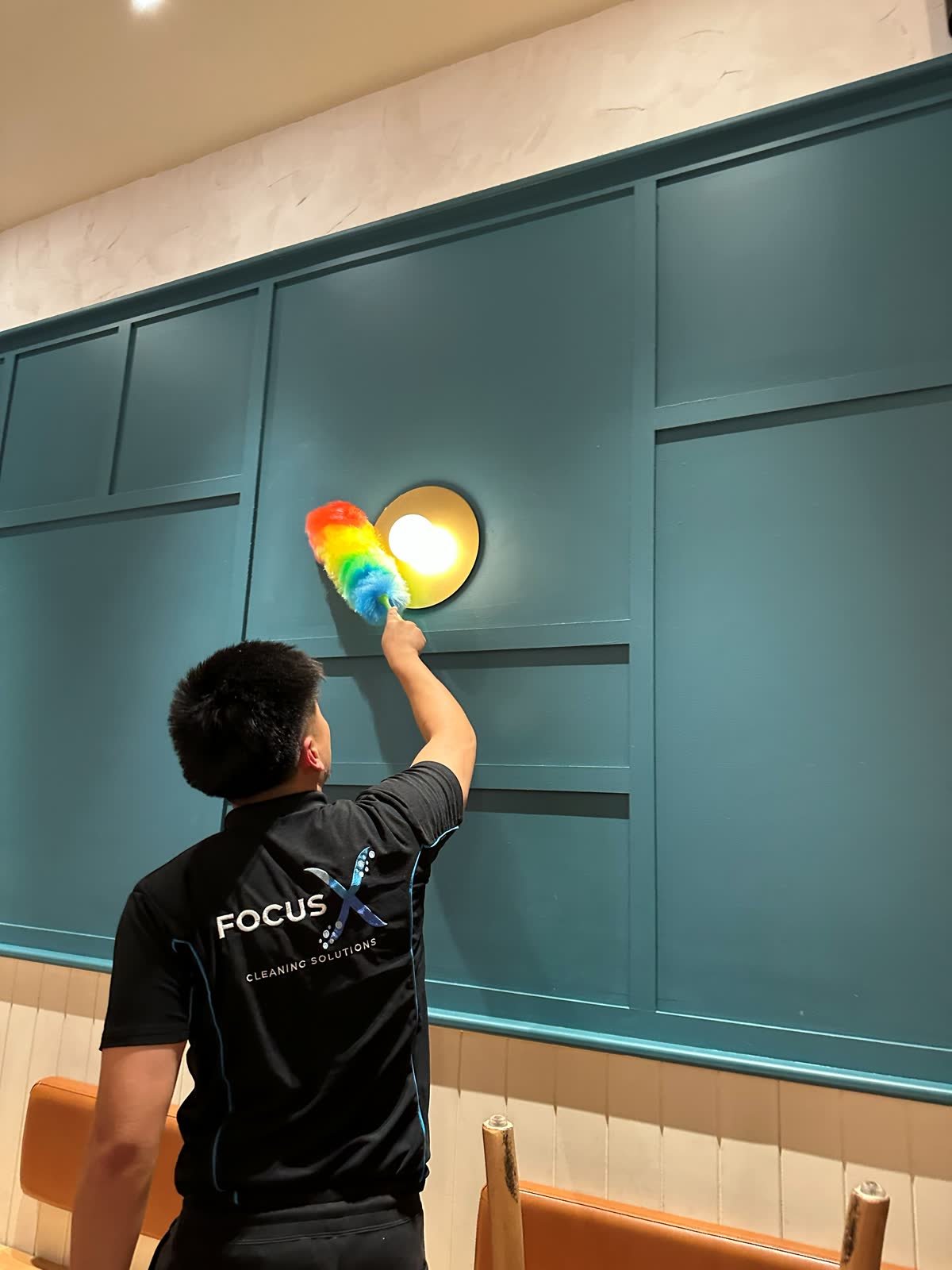
- High dusting: light fittings, vent grilles, tops of cabinets and partitions
- Carpet edges and corners with a crevice tool, where the vacuum head never reaches
- Bins washed out, fridge interior cleaned on an agreed date with notice to staff
- Spot-treat carpet marks before they set
- Wipe walls around switches, door pushes and the coffee machine
Once or twice a year
- Hot water extraction of carpets and fabric chairs — see carpet and upholstery cleaning
- External window cleaning, and internal glass above reach height — there is more on the method in streak-free windows
- Hard floor scrub and recoat where you have vinyl or sealed concrete
- A proper kitchen deep clean, rangehood and all
The periodic list is where cheap contracts quietly fail. It is easy to quote a low weekly rate and never do the high dusting; twelve months later the vent grilles are grey, the carpet has traffic lanes and the fit-out looks five years older than it is. Ask for periodic tasks to appear in the scope with a month against them, not the words “as required”.
What hybrid working changed
Most offices we clean now have a shape to the week rather than a flat five days — quiet Mondays and Fridays, a busy middle. If your cleaning is booked Monday, Wednesday and Friday out of habit, you are cleaning an empty office twice and a full one once.
Two things, though, do not follow the roster. Food waste rots on its own schedule, so a bin left from Thursday will still be there on Monday morning; and bathroom consumables run out when they run out. A workable pattern for a lot of sites is full cleans on the evenings of the busy days plus a short amenities-and-bins check on the quiet ones.
Hot-desking changes the surfaces too. When a desk belongs to one person it is effectively private space. When four people use it in a week it becomes a high-touch point, and it belongs on the wipe-down list rather than the dust list.

Six signs your schedule is wrong
- The kitchen bin smells by Thursday afternoon.
- There is a grey line of dust along the skirting boards and around the carpet edges.
- The entry glass has handprints at nine in the morning, not four in the afternoon.
- Someone in the office is buying toilet paper on their own card because it ran out again.
- The traffic lane between the lift and the kitchen is visibly darker than the rest of the carpet.
- You have had the same conversation about the same missed task twice.
The last one matters most. Individual misses happen on every site; the question is whether raising it once fixes it permanently. If it does not, the problem is not frequency, it is supervision.
Comparing quotes properly
Two quotes that look close together are often nothing alike once you line them up task by task. Ask any provider — us included — for the following before you compare the number at the bottom:
- A written scope of works with a frequency against every task, not a paragraph of description
- Which periodic tasks are included, and which month each one is scheduled for
- How many cleaners attend, for how long, and at what time of day
- Whether it is the same cleaner each week — consistency does more for quality than any checklist
- Who supplies consumables, and whether they are charged at cost or marked up
- How keys, fobs, alarm codes and after-hours access are handled
- What happens when the regular cleaner is unwell — is there cover, and does the scope survive it
- Evidence of insurance and staff screening
- Who you call when something is wrong, and how quickly it gets fixed
If you are reviewing your schedule this quarter, the fastest way to get a useful comparison is a walk-through: peak headcount, bathroom count, kitchen use, floor types and the times the building is accessible. That is what our office cleaning quotes are built from, and it is the same information you should hand to anyone else you ask.
Questions we get asked
Is daily cleaning overkill for a twelve-person office?
Often, yes — for desks and floors. The constraint is usually the bathrooms and the kitchen bin. A common compromise is two or three full cleans a week plus a short amenities check on the other days, which costs less than five full visits and solves the part people actually complain about.
Should cleaning happen after hours or during the day?
Vacuuming and floor work are easier and faster after hours, and that is the norm. Daytime service suits reception areas, busy amenities and buildings where after-hours access is difficult. Plenty of sites run both: a light daytime pass and a full evening clean.
Who supplies toilet paper, soap and bin liners?
Either party can. What matters is that it is written down, along with who monitors stock levels. Bundled supply is convenient and usually well priced, but ask how it is charged so there are no surprises on the invoice.
Do we need to do anything before the cleaners arrive?
Clear the desks you want wiped — cleaners will not move documents or personal items, so a covered desk gets dusted around. Empty the sink. And flag anything that must not be touched, such as lab equipment, samples, or a prototype on a bench.
How do we stop the same task being missed?
Put it in the written scope with a frequency, name one contact on each side, and ask for a periodic report with photos. Most recurring misses come from a task that was never actually in the scope, or a scope the current cleaner has never been shown.

