
Moving out of a Melbourne rental is a deadline problem before it is a cleaning problem. The truck is booked, the boxes are half packed, the power needs transferring, and the final inspection is already in the diary. The end-of-lease clean is the last thing on the list and the first thing that gets left until the night before.
Sometimes a big weekend effort really is enough. Sometimes it is not, and you find that out at the inspection. Here are five signs the job has moved past a DIY clean, what a bond clean actually covers, and what most agents check first.
What this covers
The five signs it is time to book
1. Your condition report describes a clean property
The condition report you filled in and returned at the start of the tenancy is the reference point at the end of it. Not how the place looked when your friend moved out of their flat, and not how tidy it feels to you now — the report, and the photos attached to it.
Read it again before you decide how much cleaning you need to do. If it records the oven as clean, the carpets as unmarked and the window tracks as free of debris, that is the standard you are being measured against. If it records existing marks, you have written evidence that they were not yours. Either way, ten minutes with that document tells you more about the job ahead than any checklist. The rules on bonds and fair wear and tear are published by Consumer Affairs Victoria and are worth a read before your final inspection.
2. The oven and rangehood are past the wipe-down stage
Baked-on carbon does not come off with a spray and a sponge. It needs a degreaser with real dwell time, then agitation, then a second pass. A well-used oven is comfortably an hour or two on its own, and that is before the griller tray, the racks and the door glass.
The door glass is where most home attempts come unstuck. On many ovens the grime sits between the panes, which means the door has to come apart to reach it. A pyrolytic oven helps, but it does not clean the racks, the seal or the glass, and running a self-clean cycle the day before handover with the racks still inside is a way to make things worse. The rangehood filter is the other forgotten item: it lifts out, it soaks, and a greasy one is an obvious deduction.
3. There is mould in the seals, reveals or wardrobe corners
Melbourne winters put a lot of moisture into closed-up houses. Black spotting turns up on shower silicone, along window reveals in bedrooms, on the back wall of a built-in wardrobe and behind furniture on the cold side of the house.
Surface mould on tile, grout and painted surfaces can usually be treated and removed. Mould that has grown into old, perished silicone generally will not come back to white no matter what you throw at it — that is a resealing job, which is maintenance rather than cleaning. If that is what you are looking at, raise it with the agent in writing before handover instead of scrubbing at it the night before.
4. The carpets have traffic lanes, marks or pet odour
A vacuum lifts loose soil. It does not lift the compacted grit that has been walked into a hallway for two years, which is what makes traffic lanes look darker than the carpet either side of them. That needs hot water extraction.
Many Victorian tenancy agreements include a term about professional carpet cleaning where pets have been kept — check your agreement rather than assuming. Either way, if you have had a dog or a cat inside, plan for a professional carpet clean and book it for after the rest of the cleaning is finished, not before.
5. You are moving and working in the same week
This is the sign people ignore. Look honestly at the week: packing, the tip run, utilities, the new place, work, and possibly children or a lease overlap that does not exist. A two-bedroom apartment bond clean is a solid day for a pair of experienced cleaners carrying commercial gear. Without that gear it is several evenings and most of a weekend — and you will be doing it after the truck has gone, in an empty house, with nothing left to clean with.
If that space does not exist in the calendar, that is your answer. It is not a question of skill.
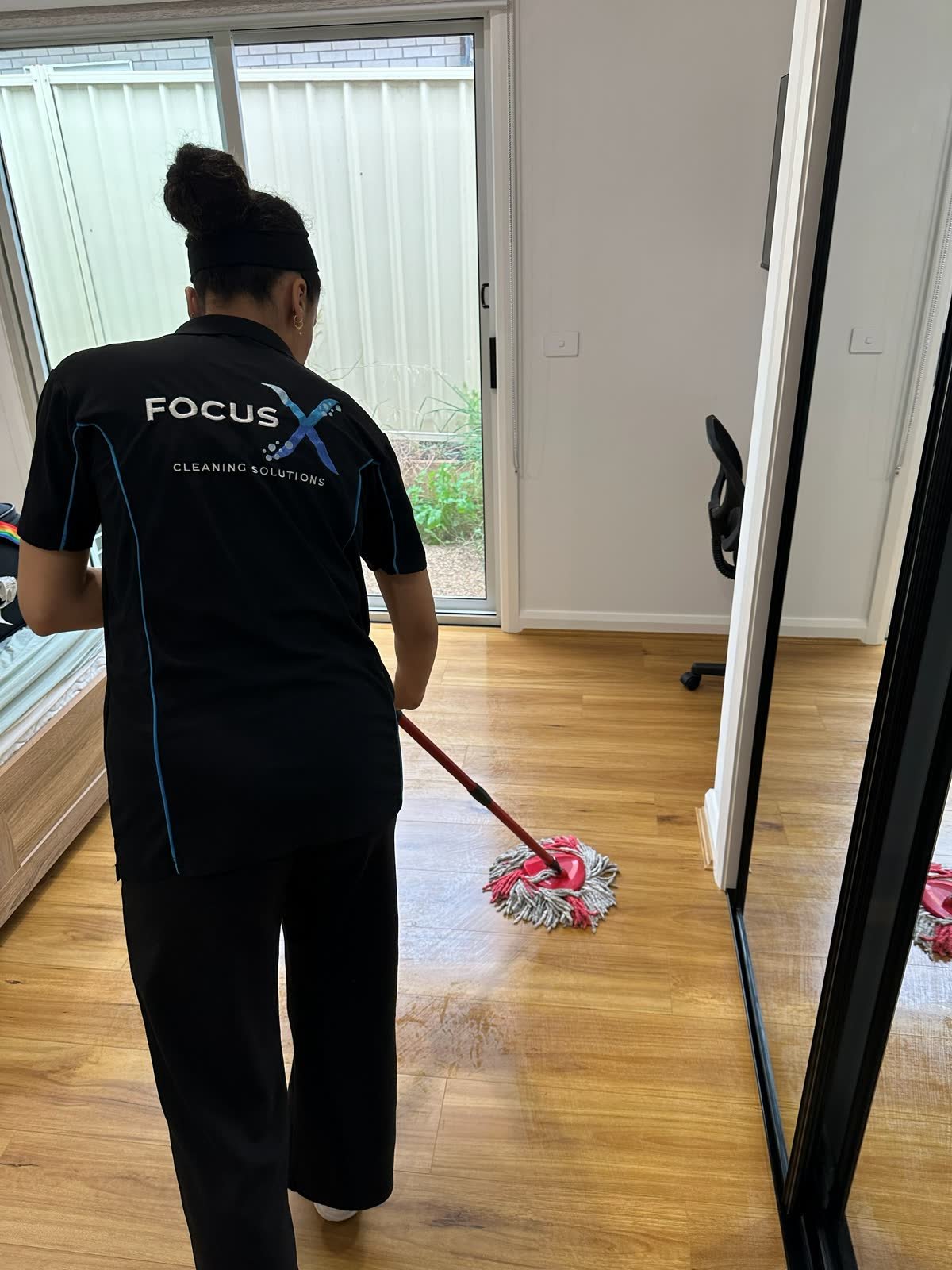
What a bond clean covers that a normal clean does not
A regular home clean keeps a lived-in house comfortable. A bond clean assumes the house is empty and that someone is going to open every cupboard. The extra scope is roughly this:
- Inside, on top of and underneath every cupboard, drawer and wardrobe
- Oven, griller, racks and trays, cooktop, splashback, rangehood and filter
- Exhaust fans, vent grilles and ceiling fan blades
- Light switches, power points, door handles, door frames and the tops of doors
- Skirting boards and architraves, wall spot-cleaning where marks will come off
- Window tracks, sills and reveals, accessible glass inside and out, flyscreens
- Wardrobe rails and shelves, mirrored doors, blinds and curtain rails
- Bathroom grout, shower screen, silicone, exhaust fan, and the base of the toilet
- Laundry trough, taps, and the cavity where the washing machine sat
- Balcony, garage floor sweep, letterbox, and a bin wash if the bins need one
What it does not cover is repair work. Scuffs that have taken the paint with them, picture hooks, chipped tiles, perished silicone and damaged flyscreens are maintenance items. A cleaner will tell you they are there; they are not going to disappear under a cloth. Our end-of-lease cleaning page lists the full scope if you want to compare it against a quote you have already been given.
What agents check first
After enough final inspections you notice that most people check things in roughly the same order. It is not a secret list — it is simply where evidence of a rushed job shows up fastest.
- The oven, including the inside of the door glass and the griller tray
- The shower screen, the grout, and the base and hinges of the toilet
- Window tracks — usually with a finger run along the channel
- The tops of doors, the skirting boards, and ceiling corners for cobwebs
- Inside the kitchen cupboards and the cutlery drawer
- Carpet traffic lanes and the patches that sat under furniture
- The rangehood filter, which lifts out and is almost never done
- Outside: cobwebs under the eaves, the letterbox, the garage, the balcony
The quickest route to a deduction is not a missed corner — it is something left behind. A half tin of paint in the garage, a broken clothes airer beside the bins, a bag of rubbish in the laundry. Removing your own things is free; having someone else remove them is not.
Doing it yourself: the honest comparison
None of this work is beyond a determined person with a free weekend. The reason people hand it over is time and equipment, not skill. Here is where the hours actually go.
| Task | Typical DIY effort | What usually goes wrong |
|---|---|---|
| Oven, griller and rangehood filter | 1.5–3 hours including soak time | Streaks between the door panes, grey racks, the filter missed entirely |
| Shower screen, grout and silicone | 1–2 hours | Soap film returns as the glass dries; stained silicone mistaken for dirt |
| Window tracks, sills and flyscreens | 2–3 hours in a small unit | Grit left in the corners; screens scrubbed hard enough to pop the mesh |
| Skirtings, door frames, switches | 2–4 hours | The tops of doors and door frames — the single most common miss |
| Carpets with a hire machine | Half a day plus pickup and return | Over-wetting; carpet takes a day to dry and a closed-up house smells |
Add it up and a two-bedroom place is realistically two long days of your own labour, spread across a week you already do not have. That is the calculation, and for some households the answer is still to do it themselves. At least make the choice with the real number in front of you. If you do take it on, the one skill worth learning properly is the glass — our guide to streak-free windows covers the method, along with tracks and flyscreens.
How to prepare so the clean goes smoothly
Whether you do it yourself or book someone, the preparation is the same, and it makes a bigger difference than the products anyone uses.
- Empty the property first. Anything still in the house gets cleaned around, and the mark underneath it gets found at the inspection instead.
- Leave the power, gas and hot water connected until after the clean and the inspection. No hot water and no lights is a genuinely poor clean, through no fault of anyone.
- Deal with rubbish yourself. Hard rubbish collection usually needs a booking with your council and can take a week or more, so start that early.
- Book carpets for after the clean, ideally the same day, so nobody walks across damp carpet carrying a mop bucket.
- Book the clean close to handover, not a fortnight before. An empty house still collects dust, and an empty house with the windows shut still grows mould in winter.
- Sort out access in advance — keys, a lockbox, parking, and a lift booking if you are in an apartment building. A cleaner circling the block is time on the clock.
- Keep the invoice. Agents frequently ask for evidence that a professional clean was done, and a receipt with a date on it settles the question.
- Do your own walk-through with the condition report in hand before you hand the keys back. Fifteen minutes with fresh eyes catches the thing everyone missed.

No cleaner can promise how a bond claim will be decided — that assessment also covers damage, rubbish, gardens and fair wear and tear, none of which are cleaning. What a proper end-of-lease clean does is remove the part of the conversation that genuinely is about cleaning, and it gives you a dated invoice to point at. If you would like a quote for your place, take a look at end-of-lease cleaning and tell us the number of bedrooms, the number of bathrooms, and whether there are carpets and pets — that is nearly everything we need to price it.
Questions we get asked
Should carpets be cleaned before or after the rest of the clean?
After. Cleaning the house first means all the dust from skirtings, tracks and cupboards has already come down onto the carpet, where the extraction machine can lift it. Doing carpets first means walking damp fibre for the rest of the day.
Do I need to be there while it happens?
No, as long as access is organised and someone is reachable by phone. It is worth being there at the end if you can, so anything you want looked at again can be done on the spot rather than as a return visit.
Do the walls need washing?
Spot-cleaning marks is normal and expected. Washing entire walls usually is not, and it can backfire — scrubbing flat or low-sheen paint can burnish it and leave a shiny patch that looks worse than the mark did. If a wall is genuinely grubby rather than marked, raise it with the agent.
Does a bond clean guarantee I get my bond back?
No, and be cautious of anyone who says otherwise. A bond covers more than cleanliness, and the assessment is made against your condition report. What a professional clean does is meet the cleaning standard and give you documentation, which is the part you can control.
How far ahead should I book?
The last week of any month is the busiest, because that is when most leases end, and the weeks either side of Christmas fill quickly. A week or two of notice makes it far easier to get the day and time you actually want.


